
Used Kubota Mini Excavator Hours Guide: What the Machine Meter Doesn’t Tell You
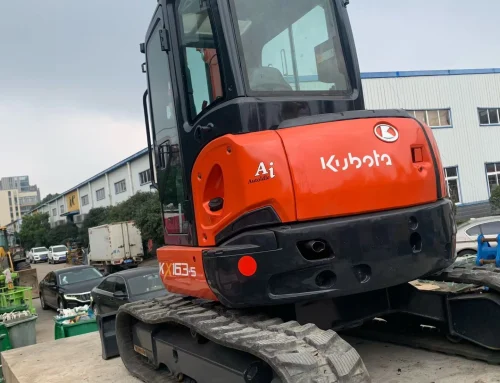
Why I Don’t Trust The Hour Meter on my Two KX163-5s
That’s the trap. Hours are a lagging indicator — the meter measures the number of hours the machine has been under load; it doesn’t give any information on the type of load, surface, operator or even if the slew ring zerks were greased every 50 hours. LC value shown is a summary value and does not have any footnotes. The meter will never admit any two machines with 2100 hours have anything remotely different risk profiles.
It is for this reason that the hour meter cannot tell you due to the fact that it has actually no method to capture application background, and also the dealership won’t automatically say since they need not. With a used Kubota compact excavator, it’s not so much about the time used, it’s what happened in those hours.
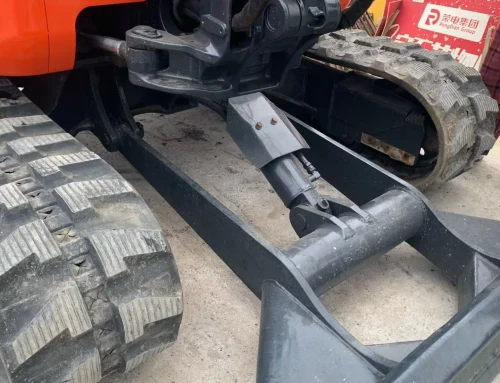
They inspect the tracks and it passes their examination if the rubber hasn’t cracked; they then proceed. You’ve now got the wrong inspection! Rubber track condition will give you an indication of whether or not the rubber has been exposed to UV light and stored correctly. It doesn’t advise you of what the track links, carrier rollers and sprocket have bounced back from during two thousand hours of operations.
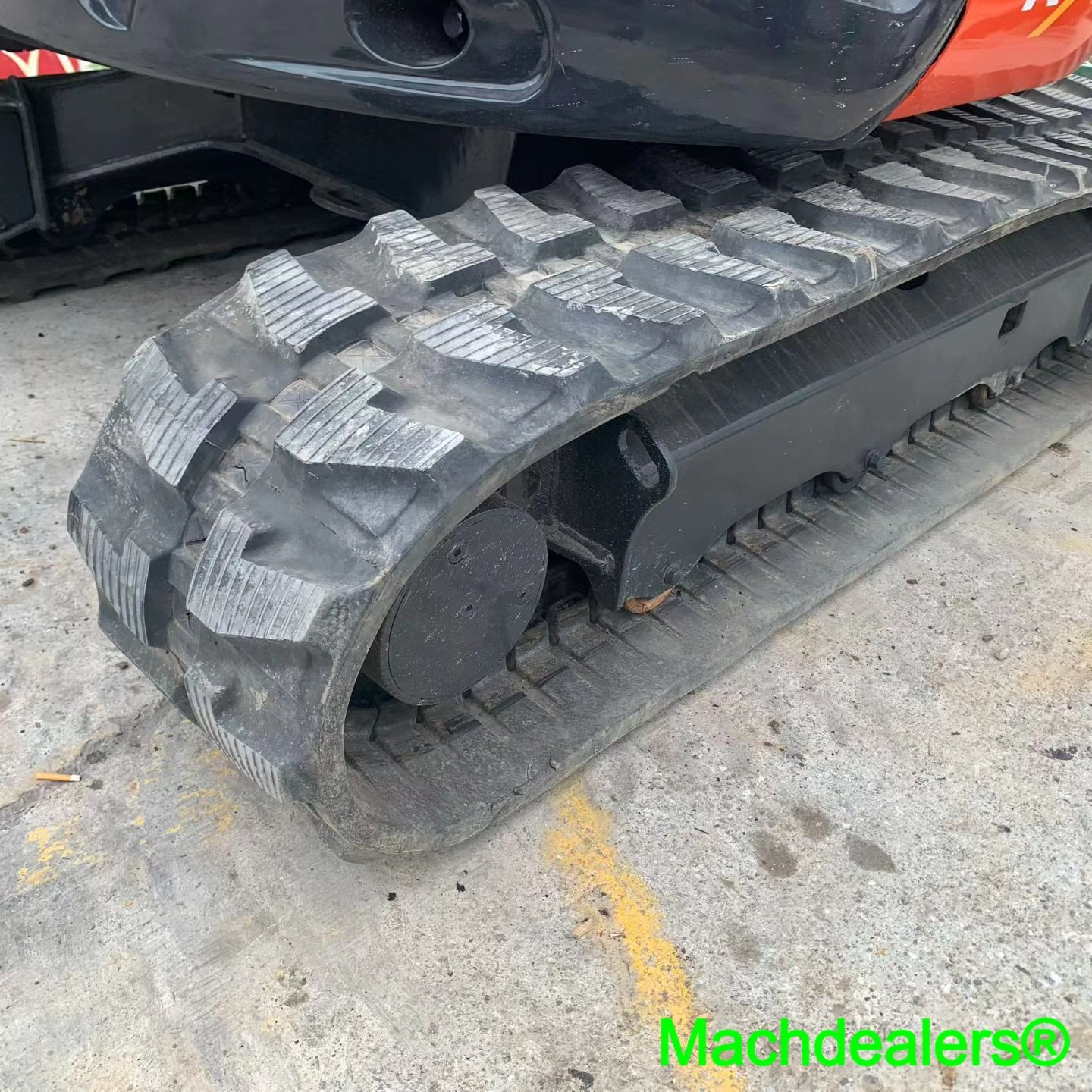
The mechanical reasoning is here. All the track chain rotates with each sprocket turn, thus completing a load cycle. With soft substrate — utility trench through loam, moderated tension and relatively low lateral disturbance is achieved for pipe installation in sand. The rhythm and flow of the chain articulation are clear. The contact geometry in the bushings is predictable, since they are rotationally moving in the links.
Place the same machine over crushed aggregate sub base, concrete rubble or hard pack fill with rock embedded in it and you will have a different load signature. A point loading between the shoe grouser and the ground due to the angular aggregate is now tracked. It’s not just articulate, but also micro-deflects laterally at each link as it goes over irregular high points. This (lateral) micro-deflection isn’t enough to throw the track, but it is enough to increase the rate of bushing OD wear in the link to bushing interface. The bushing OD wears out over time to be eccentric and not round. When you measure it, you’re actually measuring wear geometry, which is more than wear depth, and is more difficult to quantify without removing the chain.
What’s more challenging are carrier roller axial play which exacerbates the same abuse history. On rocky machines the flanges of the carrier rollers – the small raised lips on the edge of the track to prevent wandering sideways – endure repeated impact loading each time the track slides over the edge of the rock off-center. With any high hour hard-substrate KX163-5s you will find measurable (not visually apparent) axial play in carriers well before you see the OD of the rollers wear out. To test it – place both hands at the end of a carrier, and then push and pull along the shaft’s length. It’s a feel and not a measure. Any perceptible wobble means carrier will begin generating heat from the lack of precision in the contact of the tracks with the carrier and this will in turn increase the depletion of the seals at the ends of the rollers.
The end cap seal on a compact excavator carrier roller is extremely small and consists of a double lip contact seal (on later KX163-5 production, usually a “cassette” type) located on a bore which is cut into the cast-iron end cap. It must retain internal oil baths from seeping out through the shaft and prevent abrasive fines from getting into the oil bath. Lips of the seals are spring loaded to ensure lips come into contact in the event of wear. If there is no abnormal lateral loading, those lip springs will have uniform radial contact around the entire circumference of the lip.
When exposed to high axial loading, contact pressure is no longer evenly distributed and contact pressure increases on one side and decreases on the other, the seal lip wears out into an elliptical shape. As the contact geometry becomes elliptical, there is a micro-gap formed in the low load quadrant. This micro-gap permits contamination to enter the oil-bath. Abrasing material is carried into the hardened-steel surface of the shaft and the shaft starts to score. At that time it is not replacing a seal. You need to change a carrier roller assembly. The difference in prices is not insignificant.
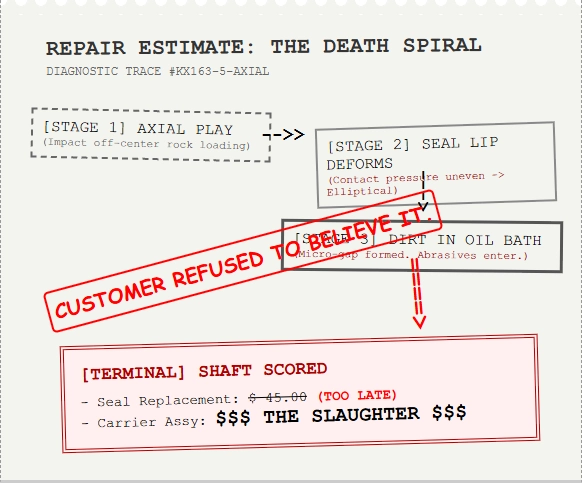
Data sources for the table above:https://parts.cat.com/en/catcorp/product/372-3375
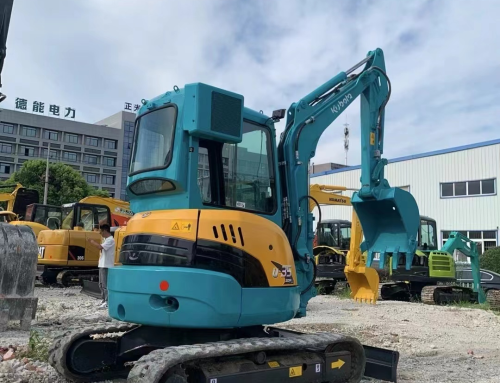
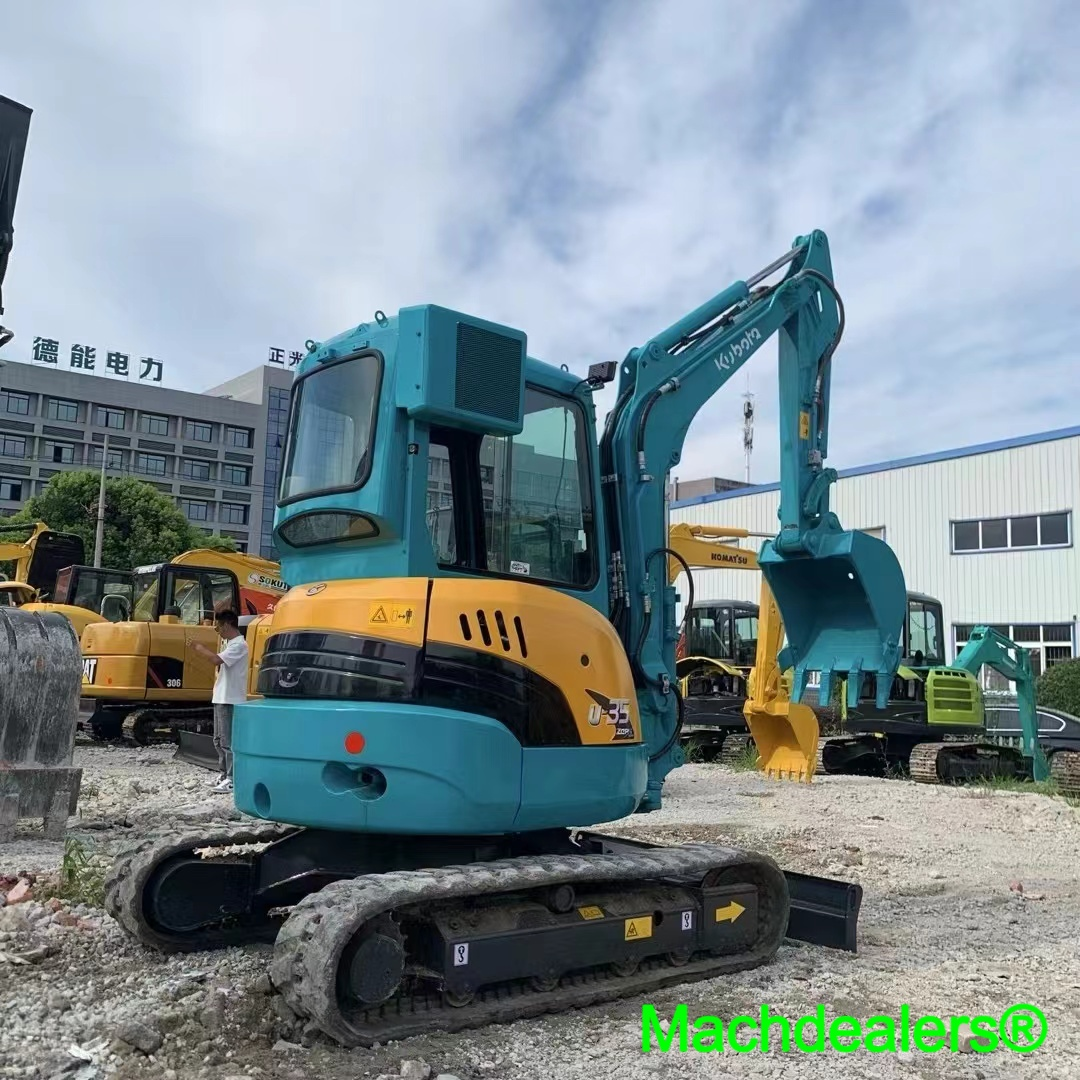
On a U35 with a documented 3200 hours of use with the horizontal working stress on a horizontal surface, I’ve seen carrier rollers with horizontal surfaces in machine condition witness marks (only half rubbed off), so the working stress against the horizontal surface was low enough for three thousand hours that it didn’t exceed the manufacturer’s surface finish. Compare that to a KX163-5 out of a fill and compact operation at 1800 hours and the same component is perhaps at minimum serviceable OD with flanges worn down to a smooth radius and carrier axial play (can be felt but does not require pressing hard).
But this is not the case on a listing sheet. The number 3,200 hours sounds more impressive and many buyers do just that and walk away. By knowing the substrate-driven wear buyers know how to make better deals at better prices — simply because they can make offers on machines a meter-watcher cannot, and refuse to make offers on “low hour” machines that the steel is telling the buyer about.
Negotiating Without a Laptop: Cross – Check The Service Log
This Oil Filter Date Stamp Method takes 30 seconds and could save a bad deal!
The majority of this size of engine oil on compact excavators have a date stamp embossed or stamped on the filter by the filter maker, usually a week and a year stamp (sometimes an inked stamp is used instead of embossing — lot code/week and year will be on the stamp). This is not the date of the installation, but does give you a bottom limit – the filter cannot be installed before the manufacture date. A meter with a 1,400-hr reading and a two-season-old filter can only be advertised for 250 hr oil changes and it has to add up. If NOT, then you have a gap in your documentation. It is not a proof of fraud, it’s a gap. However, there needs to be gaps covered up prior to closing.