
The Cat 305 Pre-Purchase Inspection
On my cell phone there is a picture of a gravel yard outside of Bakersfield where I obtained a scale ticket, in a year that I can’t remember now. It didn’t have any problems with its numbers. The machine matched the size of the trailer on paper, it matched the size of the trailer on the scales (that’s the one that legitimizes you!) and the man selling it had a new polo shirt and an answer for all of my questions. I walked. So, 15 years later and I can’t definitively tell you if on that afternoon I was reading the machine, or just reading the afternoon, but one thing I can say with certainty is the worst thing I could do this class is fail to buy a bad machine. It’s undervalued a good one either way; both feel like good money sense to you when in it.
The majority of dealers will say the machine is good! Yes, some of them, are correct. Typically, the one who is incorrect is the one who thinks he is correct.
The Secret to HECM Consideration.
When an excavator idles quietly there’s nothing more reassuring than that, some have found themselves in an uncomfortable situation after that just slid by the DPF quote within 6 months of negotiations that cost more than expected off the original price. Diagnostic data: no noise. Does not shake through seat. It builds up without any notification—and most purchasers would not want to see it—and most sellers are unlikely to have opened them.
Regeneration which does not occur by itself, but needs to be induced.
This is because the regeneration question on a Tier 4 Final machine is “Does it work?”. Whether or not the machine was able to use it in the past.
You need a temperature at the end of the exhaust to passively regenerate it, and you need the temperature to address the need of the load–that is either a full bucket or a short dig cycle or real resistance. After three years of spreading topsoil and finish cutting the sides of retention ponds this 305 most likely has not run one day at the passive regen’s desired sustained temperature. Nothing is broken. Well, it has yet to be proven by work.
It’s the soot load trend that I’m watching not the soot load value. I took data from a 305, that’s in very light landscape-service about one-thousand-four-hundred hours new, that’s what the seller said, “Barely broken in”. Clean dash. Flawless operation and no derate. But a soot load wasn’t something that was open to dispute–it was a line going steadily up for several months that was steeper than the hours accounted for. That line was referring to it stacking up faster than it was clearing, it would be the person buying it who would be the one to log the derate or when it forced an ACTIVE regen. A novice checks the internal combustion motor, and finds it clean and ok. A veteran has no sense when he reads a line line; he begins subtracting on the asking price.
One other question was whether or not the previous proprietor ever ran a hand re-gen or not. It’s either recorded on some machines or not. A History tab with regen events in it will bring some peace of mind—someone was watching the service. The absence of history is not a sign of healthy/improper relationship. Evidence of neglect by omission.
One place where nobody logs is in this OLD setting.
This was difficult for me to comprehend for years as the machine only informs you once it’s taking place.
The auxiliary hydraulic flow rate is what the user will get out of the box; it is geared toward the factory bucket, and may not be appropriate for other equipment they may add on. They’re programmed by a dealer (or operator if they have the appropriate software), and this is what I’m seeing: A machine comes in with a breaker, the breaker fails to perform, and the operator punishes the breaker and will finger any conceivable attachment. So either high flow set for a breaker, or a low-flow thumb or auger drive is installed and then the flow begins to run hot. Not catastrophically. Just hot enough to make the seals degrade faster and force the oil to go through heat cycles more frequently than is the original design intent, and thus start a long series of heat-cycle cycles with the relief valves.
I look at flow configuration like I look at tire pressure, it’s a number that needs to be in line with the work, and it’s virtually never written down any other time it’s been sold as a private sale. If I am able to move the monitor, I read it directly on the monitor. If I can’t then I ask about which attachments the machine has run. The mostly of “Just the bucket, mostly” has me curious. Are fluid still running hot despite little or no demand, have a thin pump “whine”, or show up prior to the drain cycle? I have been approached by an inspector to open an inspection port, and observed light brown oil with tiny bubbles floating up; on its own this wouldn’t be very alarming, they are drilled pockets with a mis-set flow rate, this said a whole lot about how the machine has been treated.
A couple of years ago I viewed a 305 in the IE. Conducted the cleaning of the machine, the tidiness of the yard and an owner who clearly took some pride in it. He made us coffee. The oil sample was within spec on the contamination but the oil had an”old tea”color and when I asked him how long ago he had the oil auxiliary flow setting checked he looked at me like”What do you mean?”like I had asked him how long is this one as a filter? 4 Years of contract. He said that he had no knowledge of the existence of the setting. That’s not the case, most people don’t. However, this machine was operating as a drum mulcher with a flow setting as per a breaker and the auxiliary circuit seals were already fatigued at the time of the analysis. No one knew, including he and the amount that he wanted.
The information that is actually relayed by a Cleared Code.
The words “no fault history” are good news and not so good news.
This is indicating there aren’t any stored codes active at the moment. That isn’t to say they didn’t exist: most Cat machines throughout the 305 generations had the ability to allow a dealer or Cat ET user to clear fault data and what will be seen as a result is a clean slate decided on by the user. When there is no history whatsoever above 1500 hours, it’s kind of a warning light on my mind. There are indeed machines that are really clean. However, anything else—a meter deviation, fluid temperature warning, pressure flag—and that is the two-thousand-hour machine isn’t statistically unusual, as much as the more common take on the blank screen on high-hour machine is that it was blanked prior to buying.
When I process patterns, I look for the pattern instead. A monitored machine is a few old codes that were resolved – a sensor that was replaced, a pressure flag that was filtered out from a related change, one time injector event, three years ago and has never been observed again. Codes happen. They are not in themselves capitale sentences. What was it that came next to follow them?
Also there isn’t a scanner that can touch the fluid condition and filter intervals. A clean history of fault and no fault changing of hydraulic filters in 800 hours would be a contradiction. That’s two facts and one is the real story. Before I check my dash, I check my dipstick, as if it’s a habit. The screen is clear after 3 minutes. It takes months for the oil to have its report ready and to file it, whether or not anyone wanted it.

The Trailer is in front of the Machine.
You can inspect a machine completely without a fault and still purhhase a machine; this is because the initial measurement is not mechanical.
The 305 powertrain with the coupler and thumb, full tank, doesn’t weigh what the brochure claimed and the plate on the trailer will not even acknowledge what the brochure said. I’ve seen a man be under a machine for an hour and then have to come up a ramp for 9 minutes, it’s been the ramp that has brought the day to a halt. Pump up into that thin metal screech, the swinging tail and you get a good idea of what every Saturday of ownership is going to be like. Test weight of the truck and trailer (while on public scales) before it gets lovey-dovey. Then read it against the door sticker, NOT against the seller’s recollection of them.
When that mathematics doesn’t work, it’s not a larger trailer that’s the solution. It’s another type of equipment, and it’s not going to be as expensive of a discussion as in a county weigh station as in a gravel yard.
Every question provides part A and part B. Each question has two parts A and B.
The table is not a judgment merely a filter.
We can’t show you everything you can learn in the Table.
When I began writing this, a machine with a beautifully cleaned underside–new chains, new sprockets, paint on some of the links–came to mind that was bolted to a house with 4,000 hours of vibration in each mount. Someone had actually used real cash to make the most noticeable thing on the machine new, and it did the trick, since that’s row three out of four purchasers initially check.
The Load cannot be seen in the table. Wear is 50% of the reading, the remaining 50% of the reading of the machine was what it was asked to do during wears. Normally offset boom or variable width undercarriage machine working in tight residential mowing situations do not experience the same boom foot life as one in a straight line, since the same boom foot geometry is subjected to loads typically designed to endure vehicles under moderate conditions. If there’s any play in the boom foot, and the track frame is tight, I lose my faith in the hour meter and begin to wonder about jobs that the last guy was on.

Although at the time, it was thought to be a feature, the Coupler is actually a Wear Item.
People who purchase the quick coupler think of it because they view it as a bonus. It’s a joint. Joints wear.
The pin-on machine has one loose connection, on the bucket. A coupler will create two additional points between the stick and the cutting edge and each additional place that a worn wedge becomes a bucket that is 15°out of place and a thumb that can’t stick. Nobody does that, but I carry a light looking up into the wedge housing, as I’m down on my knees in whatever mud is available in the yard. I’ve come across two occasions where the face of the wedge has been dished out on the machines that call themselves tight! What ended up happening is my inspection light went out halfway through the last inspection and I did the wedge by phone flashlight, which is not something that I would want to do now…
Little Things That Silently Start The Peace Deal
A factory which doesn’t exist
With a light I crouch under the boom and carefully roll it back and forth, around the seam near the boom foot. Poorly welded factory welds can be identified by bead width, uniformity of color through the heat affected zone and lack of bead chasing. A bead on top of bead means that a crack has been discovered, mended and painted prior to your arrival and therefore ends a conversation. It’s typically the thumb that is the issue. That foot sees its stress increased by the bucket’s digging force as well as all the lift load on the bucket blade, and both stresses manifest themselves in that foot long before they become discernable from a distance of 6 feet.
Previously Lost Chrome
I’ve seen more lifters with stick and lift cylinders than I can count and those ready to go don’t say so. They weep. The thin bronze circle around the ring of the rod seal and a slight iridescent layer on the chrome itself is not a little problem put off. This is one wiper grit moving as well–and then there’s the chrome underneath it. Over the high desert I passed on a machine that had a stick cylinder that was almost clean. Almost. If you crouched and held the light at a certain angle then the ring you can see. The seller referred to it as “condensation”. It wasn’t condensation.
Chrome pitting is initiated in a small scale and will not remain small. With the cylinder extended, run your fingers down the rod not looking at any pits, but looking for the fine abrasive particles which embed inside of the damaged chrome and gradually move inwards as the rod is being rubbed.
Some sort of radiator that you can’t see.
Cooling inside to out: face can be fine core may be choked. I simply block the fan slot with my hand and checked for obstructions which is not temperature or reading, but simply an obstruction that shouldn’t be there. A machine that had been in tall grass or grain dust responds befruitfully.
All of the Blade knows.
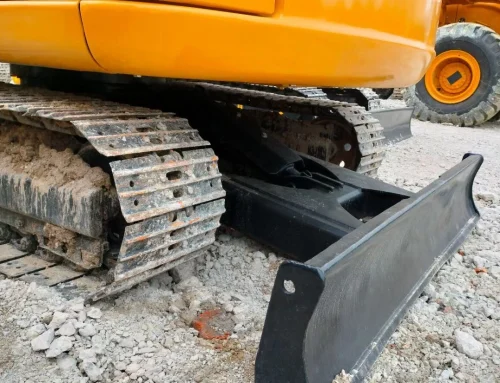
The blade is a bio-writing. The wear angle of the cutting edge, the curl pattern which is measured on the face and the thumb mount checking for asymmetric fatigue. A grading machine used for backfill, has an even wear on the width of the machine. A machine used for pushing stumps and root balls will wear out one corner, has the frame loaded in a torsion it can’t stand when used continually for that purpose and has marks on the blade mount identifying that worn corner. When a man digs with the bucket (the most common practice by operators) and it is used to lift heavy objects, the lifting capacity over the blade and the bucket digging force patterns differently, as all blade mount diagrams will eventually show. Now I’m taking pictures on all of my inspections of wear patterns. If you view enough, you can easily read them like handwriting.

How to get out of a deal without concluding the one desired
After 14 readings, there are faults with prices fixed on them and people feel go invoke the averaging with a discount. Don’t average anything.
So I mark it up to dealer labor hour rates, then figure that is the lesser cost of the job in my own shop, then mark it down 1/3 again because if this fault is underlying an apparent fault, then the job is an ocean different—cupped sprocket is a sprocket, final drive chewing up sprocket teeth is a final drive, come on that’s an ocean apart. That second break down lowers down to my offer, each time. I got to my knees behind the last one that I’d purchased, walked the readings back over and said the drive number out loud to myself and in between the four of us was closed in two minutes. I just run the functions once with the last thing I do before assigning a price is to make sure the joysticks are centered. Stiff friction going back through the gate is either a cold machine, or a SPOOL that wants attention, and I’d prefer being informed as to which, before talking about money challenges.
The fourteen readings consisted of reading material with a fixed price, and reading material without a fixed price:

The rest I learned from the machine at Vacaville. I just want it done before dinner: Clean 305, honest hours, thumb bracket, welded with three passes and no gusset, completed on a Friday. How the machine performed was good. It didn’t actually matter about the weld, it was that after 20 minutes of it being parked with the engine off that it spoke to me and told me how it had been done elsewhere on that machine. His dog barked all throughout the time I was there, at my truck. I recall the pet a lot more than the machine (dog).
Trickier is the sincere argument for an alternate class. Sometimes, the solution isn’t to select lighter equipment, it’s to choose a smaller machine: When a 305 gets stuck between the fence and the pool, customers have paid for its extra 100 pounds of aluminum and have wished for a smaller machine for that location. Walk, towing legally and turning inwards towards the size.