

Heavy-Class Excavator Sourcing: 336D2, 336D2L and 340D2L — Where the Spec Ceiling Sits
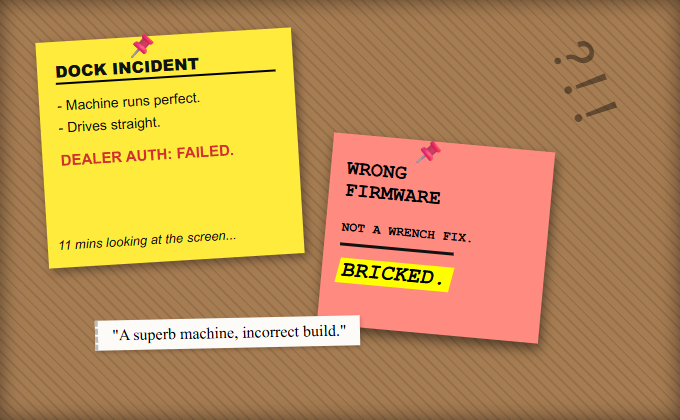
The machine had been sitting on this dock for 6 weeks before it was first wrenched and the idler was now set. It was evident by the time the first quarter turn of the track was completed – a hesitation, followed by a lurch as if a wheel had a bad bearing. The dealers tech ran out twice and, having plugged into the diagnostic port, looked around the screen for 11 minutes, closed the box and informed the buyer he would check with the factory. Not a single person had purchased a defective machine. Some individual had purchased the incorrect build of a superb one. I remember a paper bag with half a hard boiled egg in it, situated at the hydraulic tank, waiting for him to do it again, it was cold enough that morning at eleven o’clock and the condensation was still forming on the tank.
The Duty Cycle is more of a reading you can do to understand it, rather than a Spec Sheet.
This machine upgrade from the 336 to the 340 is marketed as merely having an increase in power and it is not. The geometry of the movement during recovery — the swing motor and planetary reduction have a greater breakaway torque than they used to, so when the lever is released, versus coasting ½ metre past the truck bed, you are more productive, and that is repeated 3000 times a shift. Ideas are held in place during a complete cycle with this body/style and you are feeling it under you not on the tach. The house isn’t on foot. Then there’s the counterweight casting-tip, clearly lower when moving your hand up the back corner, and the increased length of undercast under it and that comes into play as well because the two work together to move the lifting capacity from side-to-side pairing at a radius-point other than at the end-of-the-range tipping point that the load chart talks about. Truthfully, most purchasers do not come approaching that limit on the machine. For eight years they drive around on a price of 60% of this margin.
Thermal argument is the one that I trust a little more.
There’s more oil driven through a larger hydraulic system whose temperature will peak at a certain level and remain flat versus a smaller system whose temperature will slowly rise through the afternoon, it’s the same for heat rejection surface versus the flow work being performed by the pump, on a smaller machine that ratio is tighter than what the brochure implies. On the 336, press your palm on the dig tank skin a 336 will have been digging for 5 hours in July and you pull it away. Repeat this on the larger machine, on the same duty and leave the machine in this state.
Three duty cycles make THREE really worth it.
Three don’t.
Before lifting the hood, an under-loaded 340 proclaims itself.
The oil temperature should not get to working temp ever, and after 4 hrs of Light Trenching, one may place their hand against the machine’s tank and count to 10, whereas if it was properly worked out, they’d pull their hand away at number two. That is the first “tell” that you can put your fingers on and much more accurate than any gauge on the panel. The real challenge is what happens when the chilled oil reaches the river’s end.
Signs and symptoms of an operating error are:
I’ve removed return pieces off of machines that have run like it was through a sand pit, yet only had very few hours. The owner was proud of the way that he had treated it so gently.
But the aftertreatment side sucks and is less intuitive. Passive regeneration of the particulate filter is dependent on exhaust temperature remaining high for a long enough time to oxidise the soot as it is accumulated in the filter; this does not occur if a machine is idling between short dig cycles and periodic active regeneration events are forced (burning fuel in the exhaust not in the cylinder thus, over time, diluting the sump oil with diesel). The symptom that is seen is wet stacking at the mouth of the stack. The luster black tongue around the tip, the odor stinging, greater than typical exhaust. If that is happening, then it’s a machine being made to do something too much.
Three Costs that Follow the Class Step Home
Consider the following three costs that follow the class step: In the purchase order, there is one number displayed. Ownership includes 4 and 3 are added after the purchase has been settled and the machine has been added to the books (paid for on the invoice).
The Weight of Transport – Not Brochure, Weighbridge.
There is no doubt about it, it is a known and fixed operating weight on the decal: standard bucket, fluids based on OEM interpretation and no other operators or operator interpretation counterweight options which influenced your decision to choose your configuration. Looking at the scale, that’s that number plus the heavier counter weight, plus the attachment you actually run plus a full tank of diesel plus a full load of Mud on the track frames which nobody cleaned because the wash bay was also busy. The spread is large enough and can’t be bargained with. Load one up and learn it “in the flesh”. As the machine traverses the ramps, the axle clusters settle into position and the operator walks along the deck checking the position of the weight, with a low buzz indicating it’s in place, and a flat snap when it’s not. That’s when transport cost transitions from point on a line item to an interaction with a permit office. The envelope is NOT a weight problem, it is a geometry problem. The width between the bucket ears determines the roads that can be used; the height, bucket down in a specific rest position, determines if you need an escort you didn’t talk about, whether you are on a two axle or multi-axle lowboy. Different machine, same road, same destination and oftentimes, only one of the classes (the smaller one) can clear in a configuration due to paperwork. That is the cost which ultimately is authorized—and secretly disrupts the plan.
Before deposit the question that should be asked is, what parts are common?
Are there existing consumables that the step up breaks or is it in general a superset of what’s currently on the shelf? Filters, seals, hose assemblies – if you must carry two parallel stocks, that’s a carrying cost that is always incurred, in addition to your purchase price.
Emissions build.
Note the serial prefix and compare to the market that the machine was manufactured for, not the boom badging. They say more in the hardware of the aftertreatment box, the calibration of the ECM and the inside of the exhaust stack; a stack that is dry and light grey, has been running the cycle it was designed to run; a stack that is hard black, with a ring at the tip has been running somebody else’s.
Software version.
This was the reason why the dock deal went sour. The wrong Firmware or ECM configuration for target market will allow the machine to start, idle and drove in a straight line without problem and successfully walks around. Don’t expect it to pass an authentication against the dealers’ diagnostic system in that country or region. Seeing that doesn’t come back even with the best mechanical ability. It’s a laptop issue, a mechanically programmed machine that has no voice.
Data sources for the table above:https://www.diesel-obd.com/blog/detail/what-is-the-reason-for-ecm-incompatibility
Destination-market compliance.
Registration, importing documentation & difference between machine that runs and machine that is legally capable of working. These are individual questions and often buyers mix them up, often at the wrong time.