
How to Verify Real Engine Hours on Used Excavators Before Purchase
Understanding the Engine Control Unit (ECU)
All modern excavators with key electronic systems, such as Komatsu, Doosan, VOLVO and CAT have an engine control unit that records hours separate to the dashboard display. It is a black box that records the total amount of running time, load hours, idle hours, fuel burnt, fault codes, and, even throttle position, over time.
🛠️ Bypass Meter Tampering Risks: Verified Used CAT Mini Excavators
Don’t gamble on hidden flaws or rolled-back meters when purchasing used equipment. Every machine undergoes rigorous ECU diagnostics, hydraulic pressure testing, and OEM protocol verification, backed by transparent inspection reports and operational videos.
Read more: Browse Verified Used CAT Mini Excavators For Sale →
Komatsu Excavators (PC200 and PC300 Series)
All PC200 and PC300 series machines later than 2012 feature a 9-pin diagnostic port under the step at the side of the cab. The same screen will pop up every time you plug in, it is the total amount of hours the engine has been logged since first power up at the factory. This value is permanently programmed in the ECU’s “flash memory.” Should the dash read 3,000 hrs, the hrs in the ECU read 8,500 hrs, and the key on hrs read 9,200, it would mean that someone replaced the instrument cluster and that the machine must have sat idle and/or had auxiliary operations running for quite a while.
Doosan Excavators
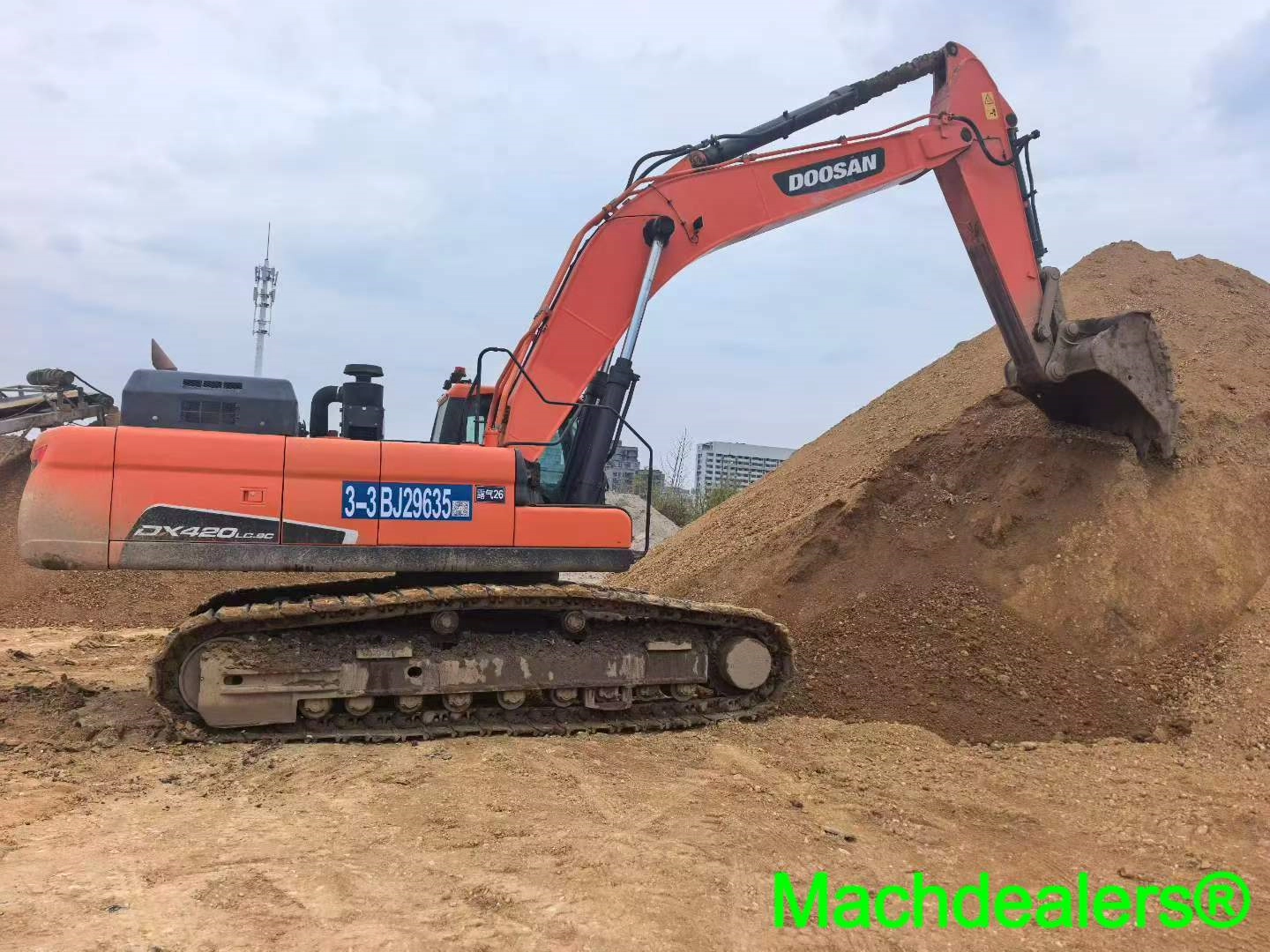
The diagnostic port is a 6 pin connector, typically found in the cab in the area behind a plastic flap on the right side, near the fuel tank. You will need Doosan’s DMS-5 software and this is more difficult to obtain, unless you have dealership or are prepared to research some gray market forums. Doosan’s ECU will also keep track of something known as “high-load hours,” that is, time spent running above 80% throttle. A machine with 5000 hours and 4200 hours high load should have put in heavy duty–likely in a quarry etc. It’s not a show-stopper but definitely has me taking a more critical look at the condition of the undercarriage wear, pin bushings and hydraulic pump condition. When a machine has reached a total of 5,000 hours and of this only 800 hours are considered as high load hours, then the machine has spent most of its life idling or in light grading activities.
Using Telematics Systems
Komatsu KOMTRAX
I can log into the web portal, and get a breakdown of how many hours the engine was used each day, since the time the machine was deployed. One graph will display the total hours versus idle hours and if you’re seeing a flat line for six months followed by a ton of idle you should be wary. Burning 10 to 12 liters per hour on a PC200-8 is normal (relating to mixed-duty, which is a mix of digging, grading and travel time). If I do look at a machine that shows it has 4000 hours and only 30000 litres of fuel having been used in KOMTRAX, then that doesn’t make any sense.
Volvo CareTrack
I like CareTrack because all the fault codes include a time. For instance, if I see the fault indication “high coolant temperature” at 6,200 hours and the display on the dash (where most dealers would have the meter set) has 4,500 hours, I know somebody reset the cluster after the fault was set. The rate at which data is refreshed is too low, the interface in the Web browser is not easy to use, and I’ve been in a few cases where the telematics system failed to upload data for several months owing to poor cell signal or failure in the backup battery in the system.
Fuel Consumption Analysis
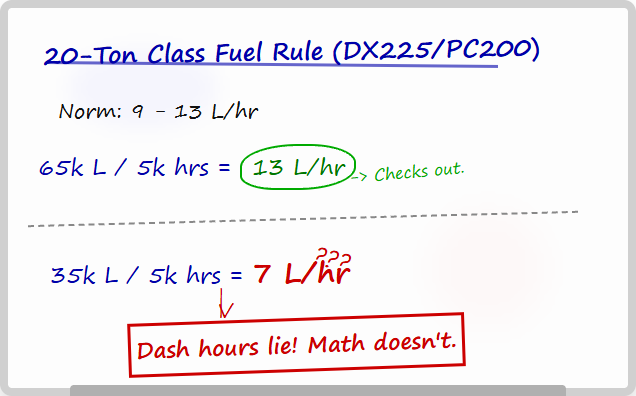
Over the years I have developed a baseline of data from 380 machines in our fleet and cross referenced to known ECU hours. Firstly, a 20-ton class – Komatsu PC200, Cat 320, Doosan DX225. In mixed duty construction operations these machines consume from 9-13 litres of diesel an hour of machine operation. That range is due to different operator skill, job type and ambient temperature. A high throttle, full bucket load machine will push 12 to 13 litres an hour, loading trucks in a Quarry. So if I can read DX225 with 5000 logged hours and a total of 65000 litres of fuel used in the consumption log, I’m making the calculations in my head: 65000 / 5000 = 13 litres per hour. But if I see one that has a DX225 with 5000 hours recorded and only 35000 litres of fuel used, then that’s 7 litres per hour.
Data sources for the table above:https://blog.rbauction.com/8-factors-influencing-the-price-of-used-heavy-equipment/
Case Study: 2016 Cat 345F
I was looking at a 2016 Cat 345F with 6,200 hours on the dash. I spoke with the seller who has fuel receipts for 3 years by date and I totalled the quantities–94,000 litres total. It either idled half of the time (so this would be evident on the ECU as idle hours) or there was somebody that reset the hour meter in the middle. I downloaded the info from the ECU. Real hours: 11,800. The cluster was changed at some time later with the idea of making it appear as a ‘low hour’ machine.
Case Study: Volvo EC480D
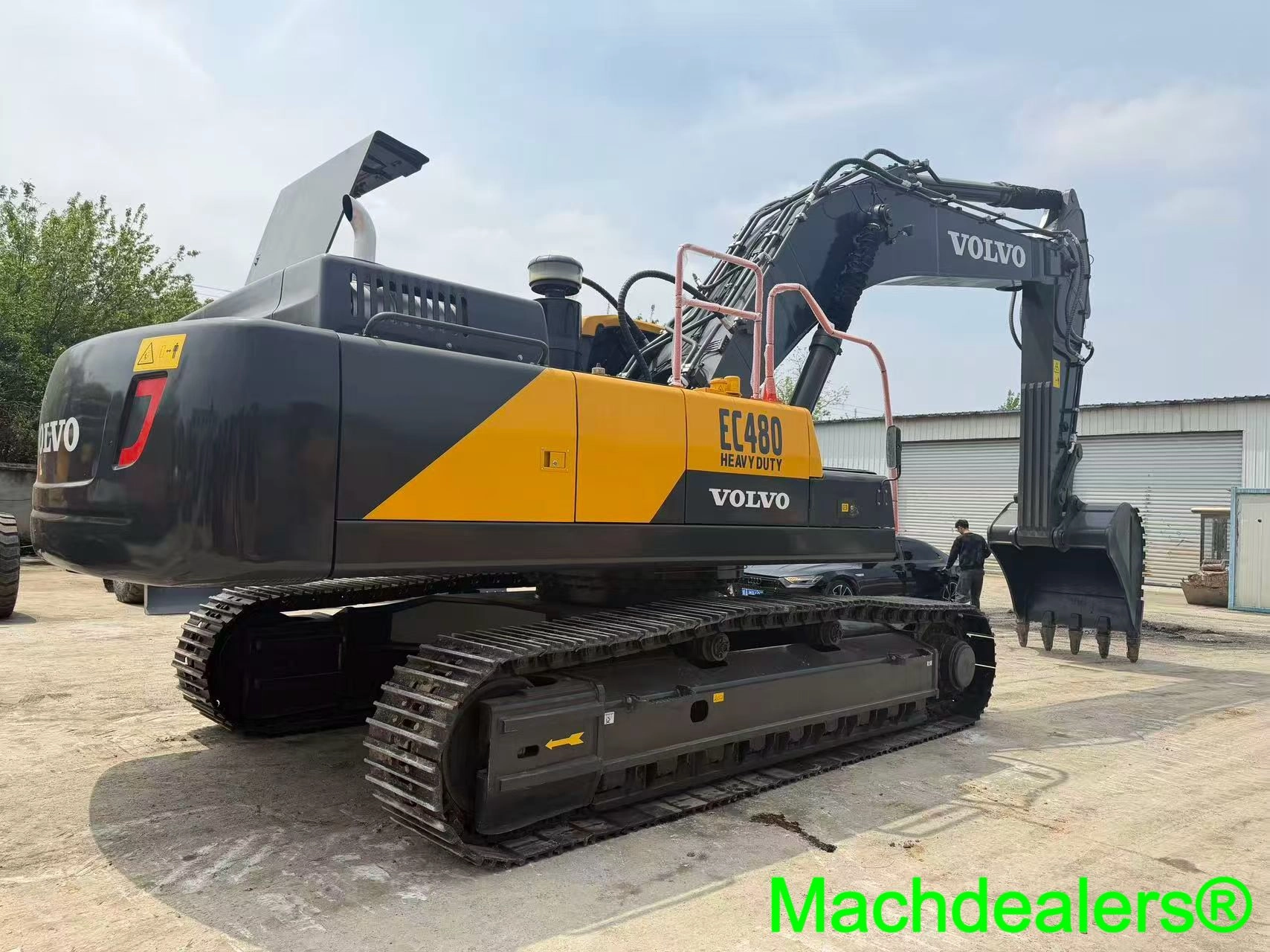
The second outlier was a Volvo EC480D which had completed 4,100 hours and 48,000 litres of use. That’s a pitifully small amount for a 45 ton machine. This machine had been used by a utility contractor for eight months, performing only trench digging in soft soil. The pins and bushings were all shot, as the trench work requires a constant articulation and of course some side loading even on low power.
Case Study: 2015 Komatsu PC300-8
A 2015 Komatsu PC300-8 with 7,800 hours and 102,000 liters consumed. This is 13 litres per hour, which is normal. However, when I went under the machine, the track roller flanges exhibited wear patterns I’ve seen primarily on machines that run over 15,000 hours including deep grooves, almost polished smooth surfaces, and heat discoloration at the bearing faces. My educated guess is that the machine was operating in an environment where the ground was very abrasive, perhaps a coal ash disposal facility or a lime quarry and that ground contact wear sped up drastically in comparison to the hours accumulated on the machine.
Physical Inspection Checklist
Hydraulic Oil Condition
Typically, excavators feature a small hydraulic tank sight glass, normally located left hand side from the swing motor. The oil should be amber/light brown with a slightly reddish hue (if the oil is recently changed). If it is black or has a milky appearance, it either has been run much past the service interval, or a water contamination is present in the machine. I remove the oil cap and then sniff it. New hydraulic oil is malty, sweet and a bit bitter, with a petroleum-like smell. Old oil has a burnt odor that is reminiscent of tar.
Boom Cylinder Inspection
Slide hand along base of boom cylinder. The barrel NOT the rod. Slide fingers underneath cylinder that attaches to boom and check for pitting or rust scale. Low hour machine will be painted with smooth paint, perhaps with some surface rust if it has been left out of doors. If the machine has many hours, there will be a huge amount of pitting in the area particularly if the machine has been used in coastal locations or around salt. I have felt boom cylinders which had the appearance of being in good condition from 10 feet away, yet there is corrosion deep enough to flake off under my fingers.
Pilot Hydraulic Pump
Caution: During start-up listen to the pilot hydraulic pump. A high-pitched whine, nearly a turbine spool-up will be heard. It’s smooth and steady on a low hour machine. The pilot pump will sound “raspy” or “grinding” on a high hour machine and/or a machine that recently ran out of hydraulic oil. The cost of a new pilot pump is $4500 plus labour, and a pilot pump that is blown is likely to be followed by a main pump that is close behind.
Reviewing Fault History
Komatsu KESS Software
The fault history is displayed on Komatsu’s KESS software in a chronological list, the oldest faults are at the bottom. Usually, this is a minor item, such as a low DEF level, or possible restriction of an air filter, and there will be an hour reading. The fault history is present in a sub-menu, and holds only last 50 faults. Early faults are pushed out of memory if the machine has been run hard and has been thrown multiple minor codes such as sensor glitches, regen alerts, DEF quality alerts etc.

Volvo ECU Limitations
This is not a fault at the machine but will mean that you will be unable to use Volvo’s ECU for verification. The difficult part is if the seller has been clever, and brought the thing to a dealer and had the ECU updated with some software. There are OEM Software updates where the fault history will be erased during the update. If I observe an ECU that has flash work done within the past six months and the fault code log is, sort of, pristine, then I request service logs.