

Buying a Used Sany H-Series Excavator (SY245H / SY365H)
The H-series isn’t only a marketing tier. The architecture change from C to H was done with a step-up in working pressure ceiling of the main pump. This ceiling is actual and not theoretical, and this is where the machine will be operating at full crowd and lift on the actual job site. The higher sustained pressure makes that pump’s axial piston assembly operate more intensely, more frequently and at a quicker rate of operating, which generates more fatigue stress than the C-series were designed to withstand. The slipper pads (small contact faces of bronze) which allow each of the pistons to ride against the swashplate without metal-to-metal contact are under a greater thermal and mechanical load with each and every duty cycle.
But consider now the fate of a used H-series (with four or five thousand hours on the clock) flying with a crew that is not meticulous about warm up procedures in freezing temperatures. Microscoring is produced on the surface of the slipper pad. It can’t be seen from outside. The machine continues to circulate. At idle, the pressure gauges are still in a reasonable range. But, the by-pass route is already being opened inside.
However, in most cases, a used C-series with similar hours can accept a pushed hydraulic inspection, as it can have a more discreet and progressive failure mode, just weeks of reduced performance prior to any more serious failure. A used H-series can show no signs of trouble — until the pump fails. That’s where you’ll find the biggest discrepancy in sales and that’s exactly what a lot of buyers aren’t seeing at all.
Plan How Much Time to Spend on an Inspection
This can be seen and felt before someone is opened. Before readers get in on the formal pressure test, as I said in the title, I’m going to be honest with you guys who don’t have a hydraulic test kit in your truck: a lot of information can be learned in the meantime. All the information to view is provided on the operator’s seat and with a leisurely walk around the machine.
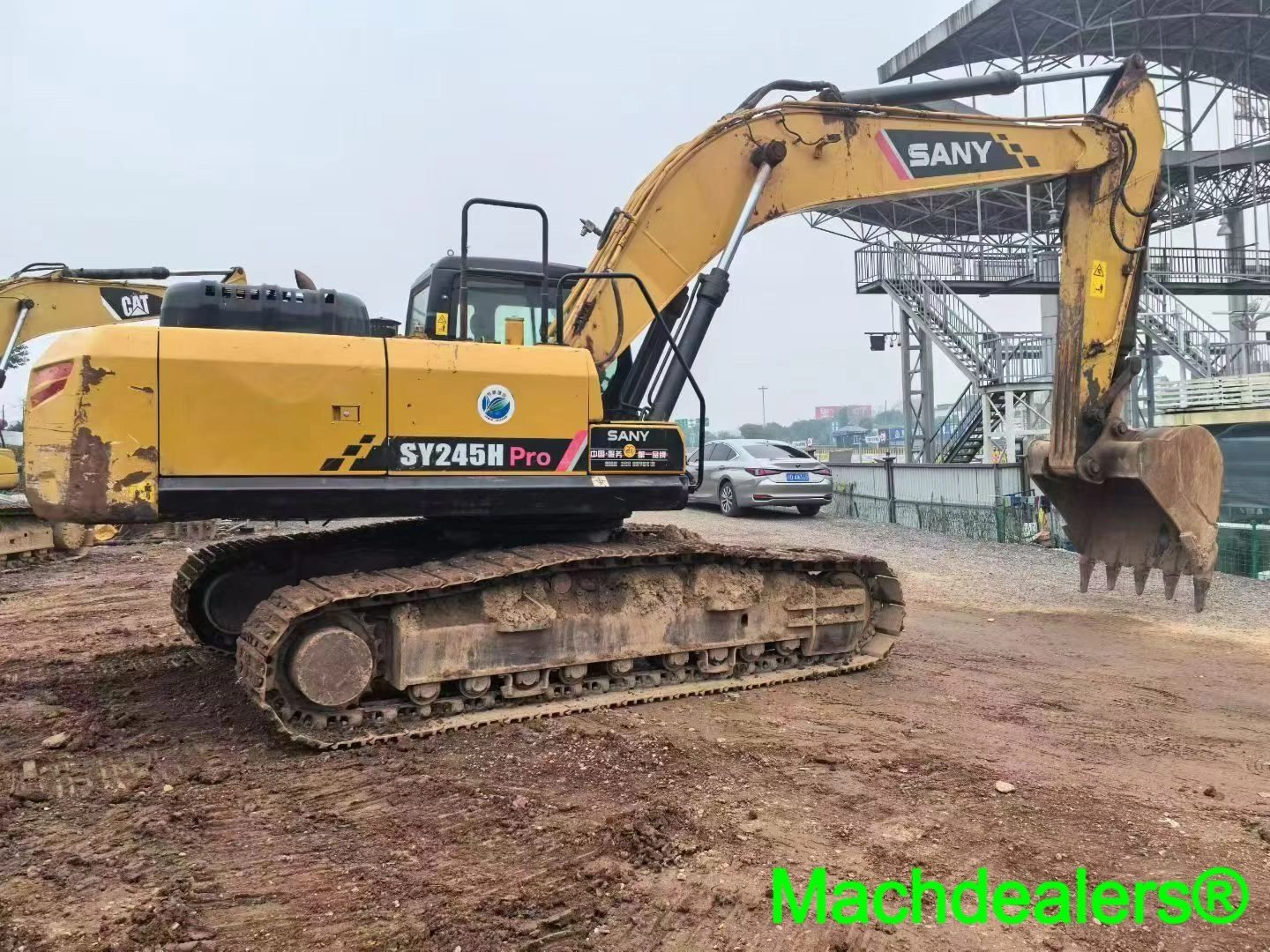
Observable 1 — The Boom Hold Test
Do always the boom hold test first. Obtain full height boom with load in the bucket and remove the hands from the boom controls. The boom shall last for a period of 90 seconds or more. A certain amount of drift is expected: some hydraulic cylinders have an infinite drift time, due to the internal leakage that occur between the spool lands in the control valve. What you’re measuring is the rate.
A healthy H-series exhibits drift that can be barely noticed over that window. A worn main pump exhibits something else: measured, progressive and most often there is a slight but audible relaxation noise in the main valve block as the pressure bleeds back. That sound matters. It is a quiet and gentle hiss, not a clump, bang. The news is heard by new technicians and they shrug. What I hear is a case that has supportive customers and I want to do a case drain test.
Observable 2 — Swing Response Lag
The second symptom is called the swing response lag. Perform a hard left (full input) full-speed swing out of a dead stop position and count until rotation starts. When it’s not broken it’s very little, on a well-maintained H-series. When you use a machine that has a decaying pump output then you’re experiencing a soft, slight nausea delay. The cab begins to move, then it as if to ponder it. In 9 out of 10 cases the output lagged behind you by a half-second and you assumed that it was a problem with the control valve.
It is due to the pump not being able to provide maximum flow fast enough to satisfy the swing motor circuit when required. It is more difficult to differentiate between a pump decay and wear of swing motors. Both produce lag. How I differentiate them: If lag occurs at the same time at boom, stick and swing, lag upstream is the pump. I would check the swing motor case drain in the particular case where the whole lag is limited in the swing only and the boom and stick move normally.
Observable 3 — Pressure Gauge Behavior Under Full Load
The third observable is the behavior of the pressure gauge when it is fully loaded with people. Monitor the hydraulic pressure read-out when the maximum level of crowd-in against a hard stop is reached. A healthy H-series will build-up relief pressure steadily when the gauge is put on the engine and maintain the level. Steady.
A needle that slides up and down and then slowly oscillates at any one stop is indicative of a pump with worn valve plates. That roving needle is the sealing face of the valve plate, who is worn and is permitting a small amount of backflow past the high pressure port. When encountered by new operators, it’s read as a behavior of the system. It is not.
Seller Walk-Around Script — Specific Questions to Weed Out Evasive Sellers
Before you ask for the price ask for three things; these three in this order.
A Note on the Valve Plate
As for the valve plate: The valve plate is a hardened-steel precision-lapped disc, whose surface finish is indicated in microinches, and which is located in the rear of the rotating cylinder block and regulates the timing of take-up and discharge of fluid that occur through kidney-shaped ports. As soon as this surface gets damaged with scoring, the seal between the high and low pressure kidney decreases. Fluid stays inside rather than helping to produce the output flow.
The most insidious type of valve plate wear is when it is asymmetric, caused due to contaminated oil, cavitation events or thermal shock from a cold start overload. Case drain flow numbers are displayed for "Uniform wear. A Case Drain Test alone is not adequate to detect pressure instability in cases of asymmetric wear (asexial wear). Often, that moving pressure gauge needle is the initial sign outside of the casing before severity to the score becomes so great that the production drops through the bottom of the hole.
I tried to remember when I was about to do my final brake jobs, I removed a valve plate one day from a high hour H series pump and spent more time than I should in a shop light, looking at the wear track. You could observe where the machine had been cavitated with oil running hot, not being cooled properly, and where someone'd put it in full load without enough cool start oil in the winter. This disc contained the whole working history of this piece of machinery. But, oddly enough, there's a lot that could be learned from a life in metal.
Decision Framework — Before You Wire
To prevent wiring together the wrong pieces, a decision framework is laid out to use before you wire.
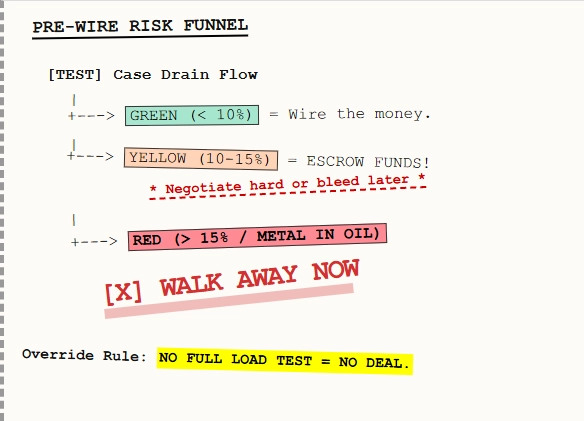
Data sources for the table above:https://www.khi.co.jp/industrial_equipment/hydraulic/pumps/k3v.html
YELLOW — Try to negotiate hard or escrow funds for repair:
RED — Price for total replacement and leave site:
The Override Rule
Any inspection without being able to actually see the machine operating under full hydraulic load, prior to the move of the money, is incomplete by definition. All of the diagnostics listed herein require machine operation. Pressure under idle, color of the oil in the reservoir, clean exterior hoses: It doesn't mean much if the system hasn't been tested under demand. If you are considering wiring money, then wait until you have witnessed the machine in operation. Full stop.