
Buying Used Heavy Crawler Excavators — 2018 SANY SY365H vs 2019 CAT 312D2 vs 2019 KOMATSU PC350LC
When it comes to the used crawler excavator buyers approach them, their main point of reference is the undercarriage. They crouch, squeeze a track and say it’s OK. I’ve seen that with every single thing I’ve seen on auction ranging from Southeast Asian countries down to the Gulf states; it’s a dead giveaway and it tells you absolutely nothing.
The information is in the measurements–and what you do with the measurements is based on which failure curve each platform is on.
Track pitch first.
Take ten links pin to pin, and measure (elongation should be in percentage from the new condition dimension in comparison to the measured dimension). Service limit is printed out by each manufacturer. However, as soon as you reach that limit, this does not necessarily mean the track is over but it is an indicator of how close you are being driven towards a forced replacement cycle.
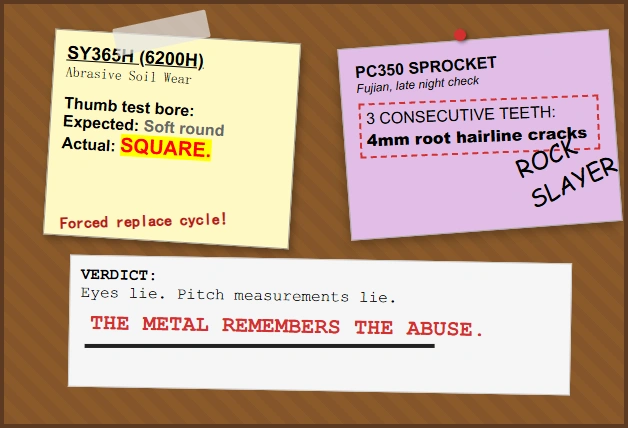
With a 4,000 to 8,000 hour rating, for the SANY SY365H, the bushing-and-pin wear rate increases more quickly than the plain old pitch. This is a metallurgical issue in that surface hardness of bushings from this build window will last longer under normal conditions, however will wear out sooner for the same pitch number in abrasive soils (sandy loam, laterite, crushed aggregate). Last year, I used my thumb to check a bushing bore of a 6200 hours SY365H. Edge should feel like soft round–it was almost square. It’s that a square that’s the warning. It is actually the time till replace, certainly not remaining service useful resource.
Evaluate the root radius; do not only consider flanks. While working in Fujian, late and tired, with half a paper cup cold coffee in my other hand, three consecutive teeth of one of many PC350 sprockets were found to have hairline but significant stress fractures from the root transition, which ran about four millimeters towards the pitch line in each tooth. That’s fatigue initiation, and it means that rock-breaking or heavy bucket striking cycles went through the drive train. It’s not picked out by the eyes that stand.
The 2019 version of the CAT 312D2 is far different. The two cone floating seal arrangement on carrier rollers and idlers also increases the load contact at all times even on temperature changes compared to the similar SANY arrangement which can be forgiving on wet work and river crossings. What’s harder, is heat cycling. A 312D2 was given to me at a port in a tropical environment to operate on an aggregate that was in an ambient state of ‘work’ on a concrete apron that was over 30°C. The idler seals exhibited the weeping pattern characterized by a light oil film which ran out from the seal gap and turned into a dark carbon ring around the idler hub. The ring is not the be all end all. I also squeezed it and it flaked off in brittle plates, rather than smeared out as new contamination does, so, repeated cycles over the design envelope have carbonized some of the oil. The item is not a monitor-it item. It’s a seal change, but can be a complete idler change if not done when needed.
Data sources for the table above:https://www.rbauction.com/pdp/2023-komatsu-pc360lc-11-tracked-excavator/16091075
There is a group of machine buyers who say, “I started my machine and pulled my boom and I’m done”. Throughout that process, however, almost all but the most obvious pump failures are overlooked.
Use to measure leakage in case drain on the main pump. Case drain is low pressure return from the pump housing back to the tank where it will be used to lubricate and cool the rotating group. Pumps that are in good condition will experience regular low flow–as slippers, barrels and valve plates wear out, a portion of the flow through the pump will bypass to the case drain without contributing to the actual pump’s pumping. That’s your proxy for hours-severity, not hours recorded by the hour meter, which can be rolled back or hours that are shown as light duty. Remove the hose from the pump, direct flow to a graduated container for a specified time period at a fixed RPM and relief and compare against OEM relief level.
The variable-displacement axial-piston pump on the 2018 SY365H wears and starts to act in this manner: When the relief valve gets too close to the valve plate face, it starts to ‘hunt’ (inconsistent pressure response). Install a gauge on the test circuit (with control load). It is normal for a well functioning pump to have a setpoint deviation within about 5 bar. A tired one hunts—consider the chatter of a failed unit to be a low frequency, slow oscillation around setpoint. Operators believe this is related to variable differences. It is not.
Make sure the loan is right before you buy, by doing the following three checks:
Now you have the how: a tape measure, a flashlight that has an active battery, a graduated container to use for the case-drain test, and the resolve to do it when you need to—walk. It’s something that not many buyers put into a yard.
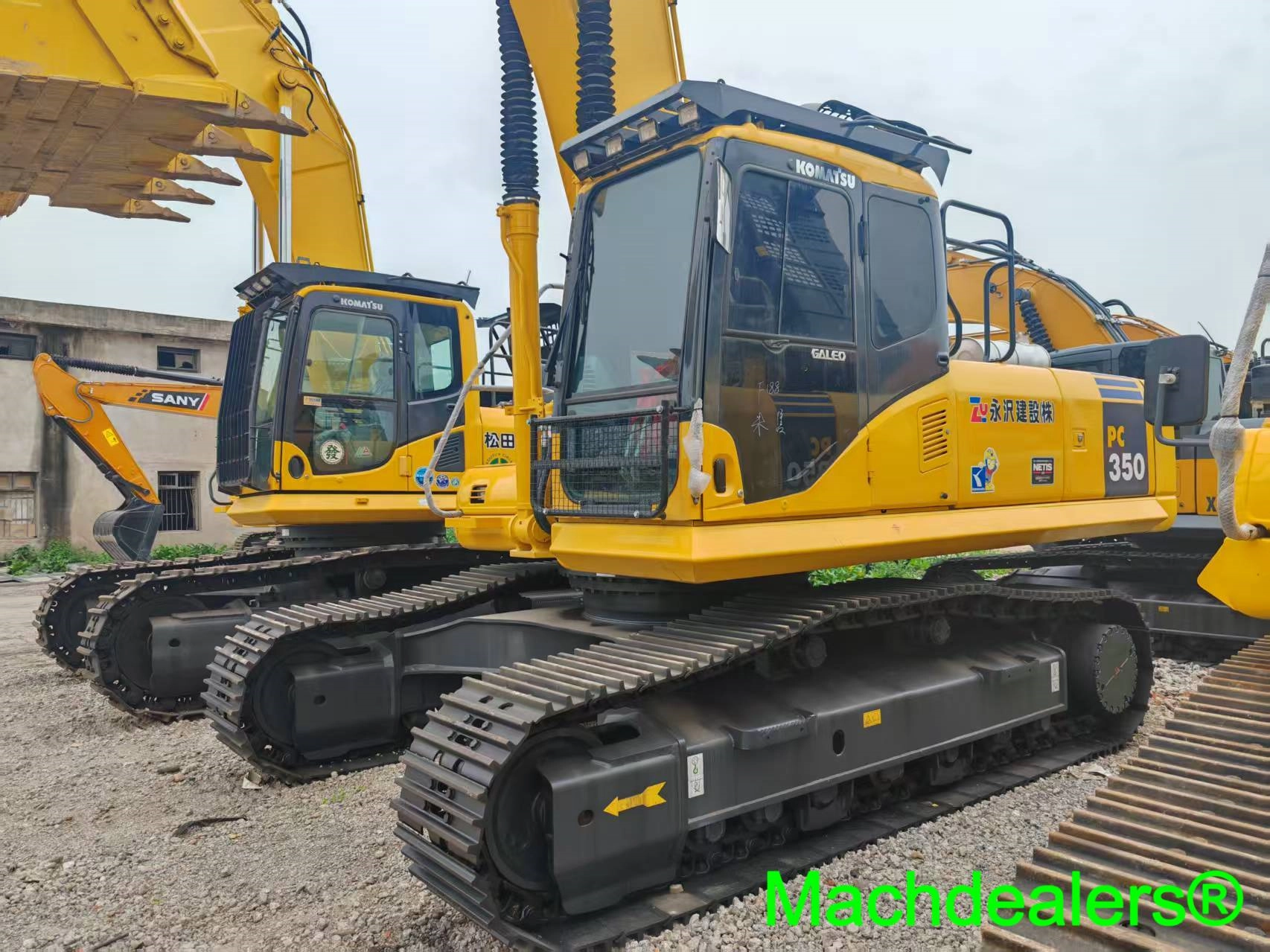
But the not-so-fancy bit is, of course, applying those criteria to the things you haven’t seen come off a low boy, from a guy you’ve only corresponded via four e-mails with and never seen in person in a market you very rarely, if ever, visit. You can only leverage inspection results when someone has already made the measurement and recorded the number, so we include our track pitch reading, our case-drain result at operating temperature and what the seal history tells us (good or bad). There’s nothing that is quite like the chalk mark you make on your track shoe yourself with a photograph. There’s no spec sheet that can take the place of the handful of questions you just learned to ask. We would not have listed a machine that we haven’t placed a gauge on.
Have the yard, instead of surprising us with their exactly current stock during the phone call, post the current state on display, first undercarriage readings and then hydraulic readings for all the heavy ones–the SY365H, 312D2 and PC350LC.