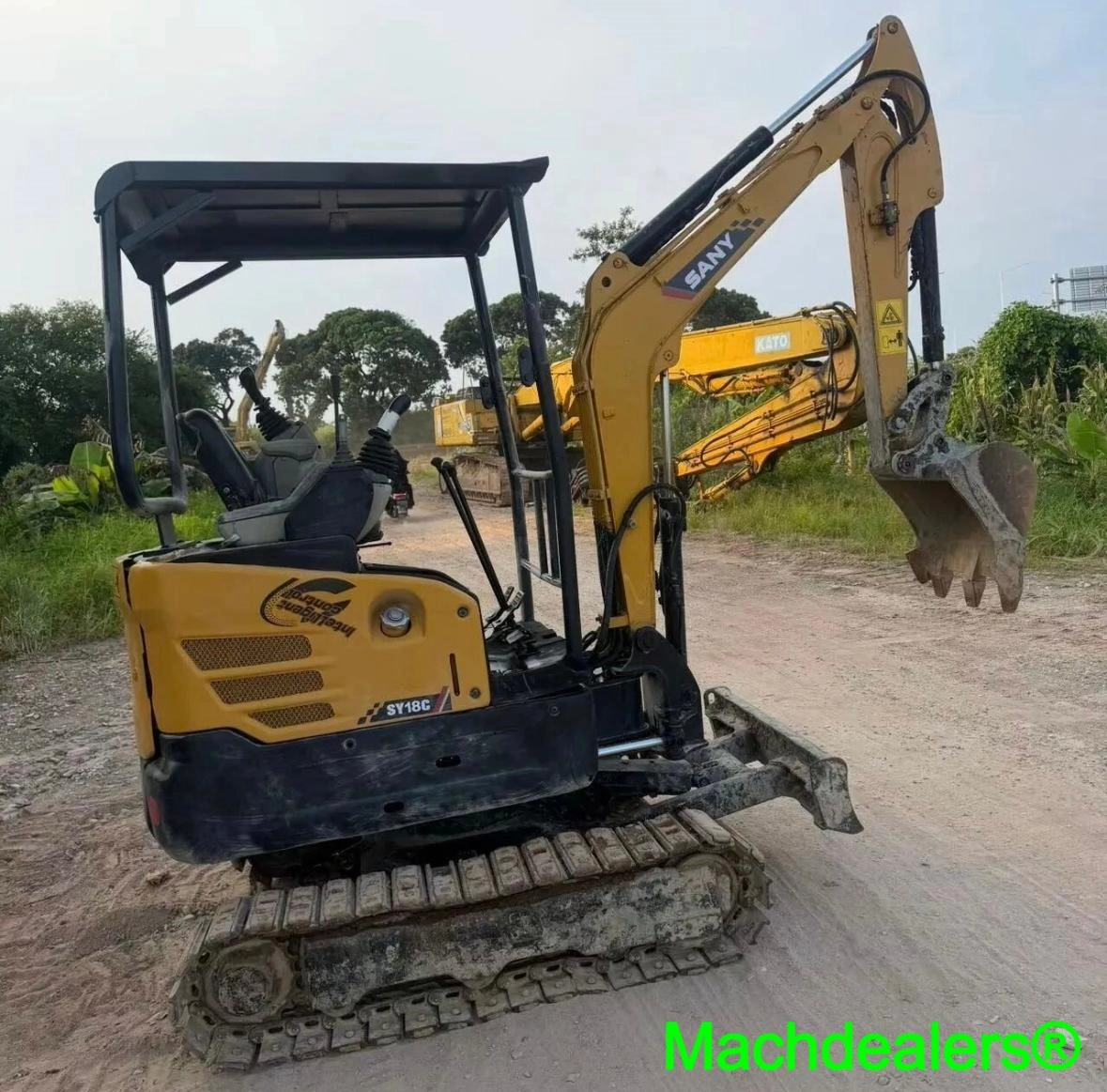

Hydraulic Oil Contamination Check You Must Run on Any Used Hitachi 20t Excavator
There were no issues with the machine’s sound. That’s what he told me on the phone twice–eleven weeks ago he has purchased one of the ZX200-3 for the promise of a listing photo of it with a clean ride screen and a receipt listing 40 litres of ISO 46.
A month later, standing before it on the track frame with my hand on the pump compartment cover, I was thrusting down the tracks, with half an eaten sandwich put on the battery box lid, as four hours had passed and I hadn’t stopped for lunch. There was a fluttering through the steel and I could feel it in my wrist, not in any rhythm, but a tendency to shake: high-frequency shaking that propagated up through my wrist, got weaker around the elbow, and died somewhere above the shoulder. Thanks to nine hundred hours of my life I’ve learned that a healthy HPV-series twin pump propels into the frame a hum, dull, practically uninteresting. What I felt was like a pump was pumping itself up into its own regulator. Hunting. Making a correction, then an ‘over correction’ at least twice a second.
That flutter is the behavior of a valve spool which has a 3 micron clearance, after 400 hours of operations with lapping compound, and that’s why his job lasted only 2 weeks, in a 6 week earthworks program with 3 operators standing around a machine that wouldn’t hold grade, and a dealer service truck with a laptop in the mud telling him that the proportional solenoid currents were “within range” (they were) and that the pump compensator was “possibly worn” (it was).
Here’s the bit no one does include in the listing. Hydraulic oil that appears to the like a weak cup of tea in a sight glass may have an ISO code of 21/19/16, and meet all the eyeball tests that a buyer knows. Where new oil (poured from a clean pail at the tank, but through a dirty funnel) ends up in my experience is around 19/17/14. On the pump case drain under the chassis working temp, the Hitachi book states a flow of 18/16/13 or better is desired for these 20 tonne chassis. One or two code numbers worth of difference is the entire commercial difference and is not easily discernable at the seat.
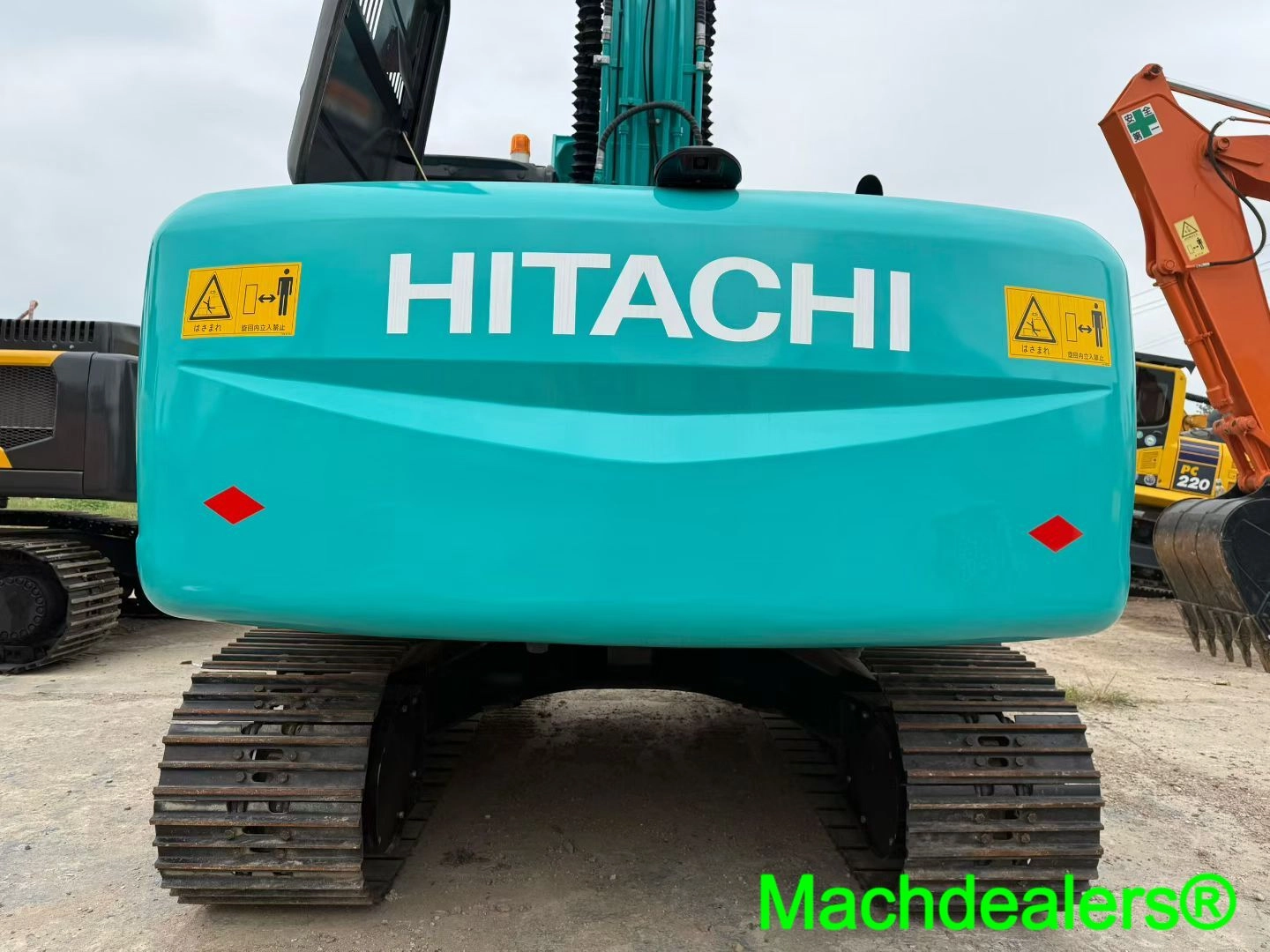
I do need to be careful here and so do you, with any supply of numbers without any conditions attached. Cleanliness targets change as the pump family did as well as the servo valve stack, duty cycle and how the machine was stored. The only thing I can say is the physical after effect and that’s the truth. Thus anything 19/17/14 or below on the fine channel, sampled hot off the case drain NOT from the tank, is when I start considering pricing internal leakage (that is prior to needing to talk about the undercarriage). It is not a requirement, but rather a statement of opinion, belief or judgement. It also has been the decision that has saved me from buying 3 items that I would have regretted this year.
Field Sampling Sequence: 90-Minute Field Sampling Sequence That Would Have Saved Him.
<p>Knowing the importance of a lab truck is not essential. There are ninety minutes, one clean bottle, one magnet, a flashlight and a determined seller not to get a forearm of hydraulic oil from which you can’t wash it off.</p>
The placement of the drain port, and the deception of the tank.
I’ve got to disrupt the clean and neat recounting of the story just to tell you what my hands do. On ZX200 and ZAXIS 200 variants, walk into the pump compartment, remove lower access panel and locate a pump case drain hose which drains down to a fitting on the upper side of the hydraulic tank (on most of these 20 tonne chassis it stops at this hydraulic tank fitting—on the ZX200 it is a plug on the regulator housing, and is about 17 to 22 mm hex). For the ZX240, the geometry is kind of different due to the pump positioning in the frame but not logic.
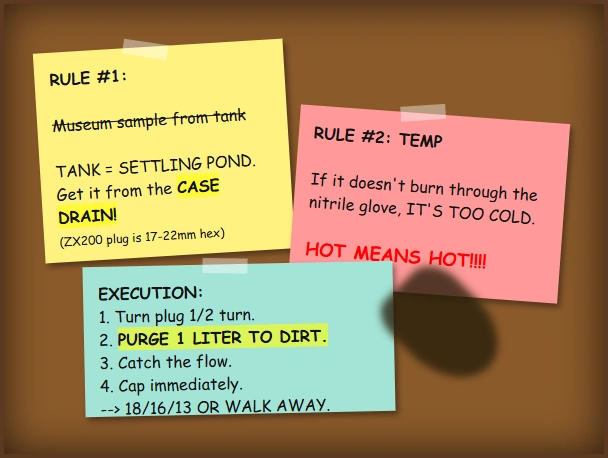
Collect a sample from the case drain, NOT FROM THE TANK.
The tank is used as a settling pond. All the heavy material has already been removed from the oil, and everything you want to and should be counting—the size of particles between 4 microns and 14 microns—is still floating around in the oil just removed from the oil pump’s oil working surfaces. Turn the drain plug on the canister½turn, drain the first liter to the ground or into a rag and then utilize the flow for your bottle. It is that purge that is more important than the bottle.
They become very precious in regard to the bottle. Wash with fluid to be sampled 3 times, cap immediately do NOT leave it open while writing something down. Fine. However, I have seen several times that when someone has an expensive kit he bought a “museum sample” and then withdrew it cold from a machine that had been turned off for 2 days, there are several times I’ve seen someone with old experience pull a scruffy sample hot out of the drain and read the machine correct. Time beats hardware–as well as temperature and location.
Data sources for the table above:https://www.cat.com/en_US/support/maintenance/sos-services/take-sample.html
Hot means hot. Does not cause scalding but is uncomfortable with nitrile glove on. A “cold sample” provides information about the tank and a “hot sample” provides information about the system.
A flash light will not provide a Particle Count. Before that I will be as candid as these words can be about that and I will describe the proxies.
This test is one of those that the majority of buyers neglect to perform, the compensator-drift test.
Then the test that really foretells of cash.
Ensure that the machine is hot, the arm is resting and the oil temp at the operating temp for the machine and observe the oil pump’s regulator action instead of the oil temp/pressure gauges—gauges in my experience are calibrated by hope! The key to look for is the pressure (held) on the pump is steady. In No load condition of the machine, listen its functioning.
If you have a flow meter, tee it in and perform following compensator drift sequence: load circuit gently, hold, release and observe the time it takes the pump to go back to stand-by. If the pressure is starting to slowly build back up to it’s normal setting over a 5 min idle period, that’s the sign that there’s slow return. The stickiness causes the oil to leak by the lands on the compensator spool, the pump measures the wrong delta-P, and the pump operates at a partial stroke and will do work it’s not supposed to. That work is converted to heat. This heat turns to varnish. The Varnish is placed again in the Spool.
Then the obsessive part–this is when the majority of deals really turn–you see no one blogs about it.
A sealing washer is used on the case drain plug on these machines and on some revisions an O-ring with a steel backing. The material this O-ring is made of is a nitrile, usually in the 70 durometer range, and it has been in service in this way for eight thousand hours or so, between ambient and 80-odd degrees celsius. Using a scribe, remove it and roll it in between your fingers. If the ring is healthy it will roll. An aging print resists but falls apart when flat and, when viewed in the light of a flashlight, there’s an intricate pattern of fine hairline cracks. Squeeze and let go; if it doesn’t bounce back to round in a few seconds then it has set a“permanent compression set”. Now that ring is an all too small, inexpensive leak that you’ll never even notice.
The suction side of an hydraulic pump is affected by air in such a way that contamination does not affect it. It collapses vapor cavities against the valve plate at a very high velocity and the pitting it causes appears to be someone taking a“valves plate chisel”to the bronze in the form of a tiny chisel. I have experienced instances of opening pumps that have oil that appears like threshing wheat, but the value plate is “sand blasted”, but the oil analysis is unremarkable. It was the air that was the issue. A 20c piece, a five figure ramification and the seller will give you the blankest look if you touch it for he’s never pulled that plug anything at all.
The suction strainer cover gasket is exactly the same and so is the square cut ring in the pilot filter housing, the latter becomes somewhat distorted in use and distorts in such a way that it no longer fits in its housing grove and inevitably “these old Hitachis just seep a little” results.
My rule which I have learned through the hard knocks is this: sampling is not a due diligence activity, it’s the due diligence activity. The seller is not protecting the machine if he refuses to provide a hot case drain sample on his machine which he claims is serviced. On the protection thing, he’s protecting the story. Walk. There will be another one coming next week, the market for the 20 tonne iron is not a market where you need to take the first decent looking chassis which is available.