

Used 1.5-Ton Mini Excavator Hour Fraud: How Fake Runtime Enters the International Market
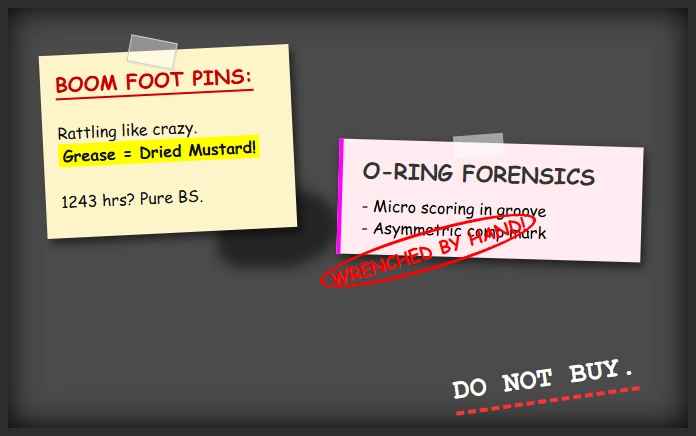
Once, before breakfast, I saw a machine–in the somewhat weird atmosphere of the coastal humidity–that showed 1,243 hours. Clean digits. No Dash Error codes. The guy selling me the property was standing right there side by side, next to me, with his arms folded, the seller who doesn’t feel like having to answer you. I massaged my thumb between the inside boom foot pin bracket lip and the grease pack (it turns to brown clay or dried mustard). The fouling accumulation was not found to match with 1243 hours. Not even close. The texture isn’t built up at the time of display.
Brand-by-Brand: Fold-under-Dealer-Tools Display Controllers and Fold-needs-a-Screwdriver Display Controllers
There are different types of meter fraud that may not be apparent at first glance. It is totally dependent on the structure of the instrument cluster, and the structure not only looks one way from the outside, but it is also constructed differently as well.
For a large number of machines in the 1.5-ton class, the display controller has a CAN bus to talk to the main ECU. To the end of displaying the hour counter value to the operator, the value is stored in a register of the display controller and is separate to the runtime accumulation logic, running in the ECU. The reason for this separation was a design choice, and was technically sound initially–it was a design to be replaced when the display was damaged, without having to reprogram the ECU. Practical engineering.

In this class, there are some manufacturers with integrated display-ECU architectures that have the hour counter with the controller in a single EEPROM instead of a separate display module. The only way to change what’s displayed is to remove the instrument cluster, find the EEPROM chip (usually a part with 8 or 16 pins who’s soldered directly to the instrument cluster circuit board), remove it, read it out with a programmer, edit the appropriate memory locations inHex, write the EEPROM back and solder it to the circuit board.
I have dealt with boards which have been through this process. A certain joint shape would be the result of the factory wave soldering process; it would be smooth with a just a slight concave at the fillet. Under the iron, hand rework–even well done–results in a duller surface, and little halo of flux residue. This can be read in less than 2 minutes with a loupe with 10x magnification. Inspect cluster connector locking for any loose connections also. When it comes to connectors that have been once pulled, and reseated, there is micro-abrasion at the contact points on the locking tab that was not placed there during the original assembly.
You will be surprised to know, that the time shown on the display panel (hour counter) is not the most reliable indicator of the machine’s runtime. Just the most obvious of these.
There is a completely different accumulation pathway for the engine’s runtime registers which are maintained by the ECU. These registers are tallying up based on the amount of engine run-time that the ECU is keeping track of directly, such as crank position sensor activity, fuel injection event numbers or cycle logging of coolant temperatures. They do not make any mention of the display counter. Storing a new value to the display register does not affect the event accumulation stored in the ECU because they are not intended to maintain synchronization.
There is no need for complicated interpretation in the production of the evidence of the timestamp. It just simply has to be pulled, and most overseas buyers in this category don’t do that prior to sending a wire.
Before you wire the deposit, you need to find out the following information:
ECU runtime cross-reference. Pilot studies for access to ECU data should be made before the price discussion. Most of the engines in this class will allow read out of engine ECU runtimes, key-on cycle count and stored DTC timestamps without dealer-level authentication by a third party diagnostic platform that supports the protocol. If seller does not give this access, take the refusal of this access as data. If they’re not hiding anything; there’s really no point for the seller to refuse a pre-purchase ECU read.
Three points in the real world that never get approached by software editing.
Data sources for the table above:https://www.cat.com/en_US/articles/for-owners/backhoe-loaders/backhoe-loader-grease-points.html
The proof of seal replacement was achieved is clear and is permanent, which is why the following is very relevant to the most buyers: There’s also micro scoring visible in the face seal groove itself, the walls of the groove will have minor lines around the circumference of the overall circumference of the groove, caused by the previous fitting removal which was NOT torqued, and was most likely disturbed for the removal. Additionally, if the replacement fitting was not directly aligned with the current during installation, there will also be a slight compression mark in an asymmetric pattern on the sealing surface of the current O-ring; a quadrant is compressed more than the other quadrant (as evidenced by the differential surface sheen under a light source at a low angle from the ring’s surface).
Please commit the Standard Before You Commit.
It’s important to know how meter fraud is introduced to the supply chain, but only half the job is done. The other half is using that knowledge at check-out–that is, using equipment that has been scanned for ECUs instead of having to create a verification matrix for each machine that you’re looking at.
The diagnostic approach detailed throughout this article–using ECU runtime versus the display counter, key-on cycle ratios, DTC simply timestamp evidence, or pilot port O-ring evidence or tracing the documents of chain-of-custody shows–is a pre-purchase diagnostic approach. The question is if you do it for every candidate machine or if you take it from a platform where it’s been done before that screening is done prior to the machine going on the platform.
If you are looking to view available stocks available in this class, the best way to validate that you are viewing the correct stocks is to filter out the displays showing verified hour ranges — verified in the sense of using a cross reference of the runtimes from the ECU and not the information reported by the display — and then compare their specifications with your operational requirements before you enter into a price negotiation.